Soil Made Visible
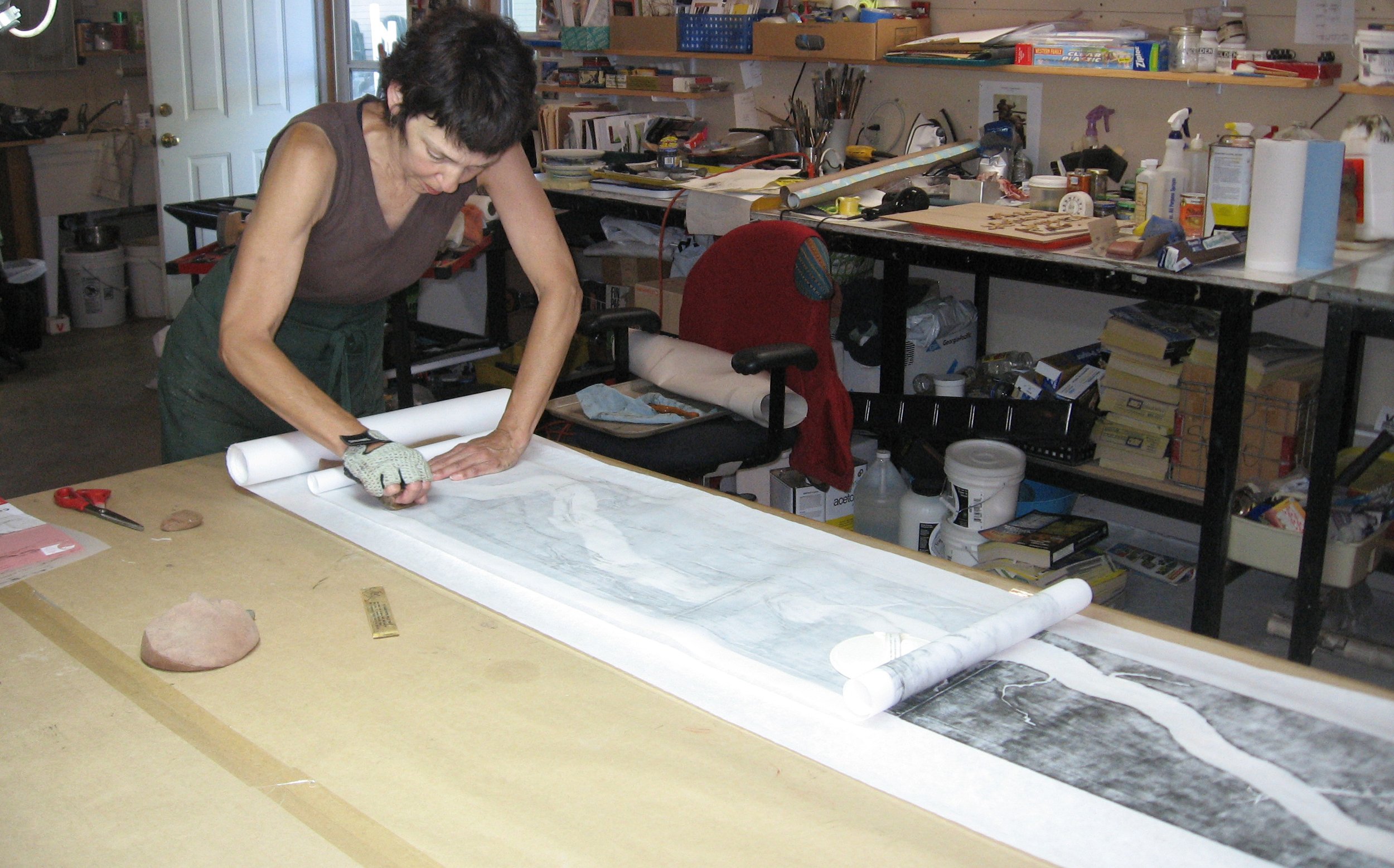
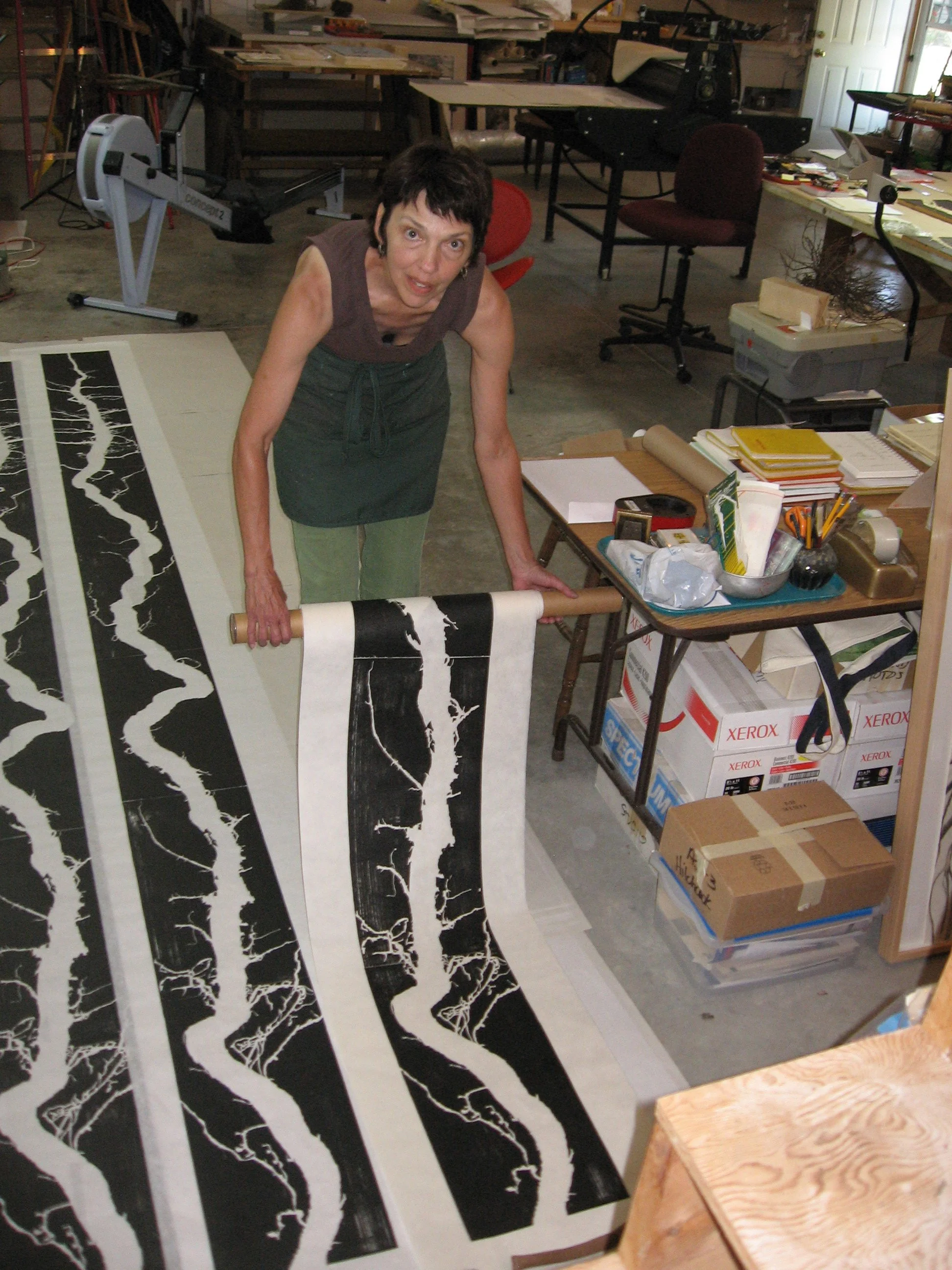
This project was a collaboration between myself, an artist and Professor at Gonzaga University and my sister Pat, a soil geographer and Professor at the University of Minnesota Duluth.

PROJECT DESCRIPTION
Soil is vigorous and vivacious but virtually invisible and silent, as it nurtures seeds to germination, incubates microbes, changes its parent, and swims and swarms with life. The goal of this art-science collaboration is to make soil visible. We are a pair of blood sisters, a soil geographer and an artist. As we talked about the living,breathing, corporeal nature of soil, we became intrigued with the idea of burying a canvas to let soil make art.
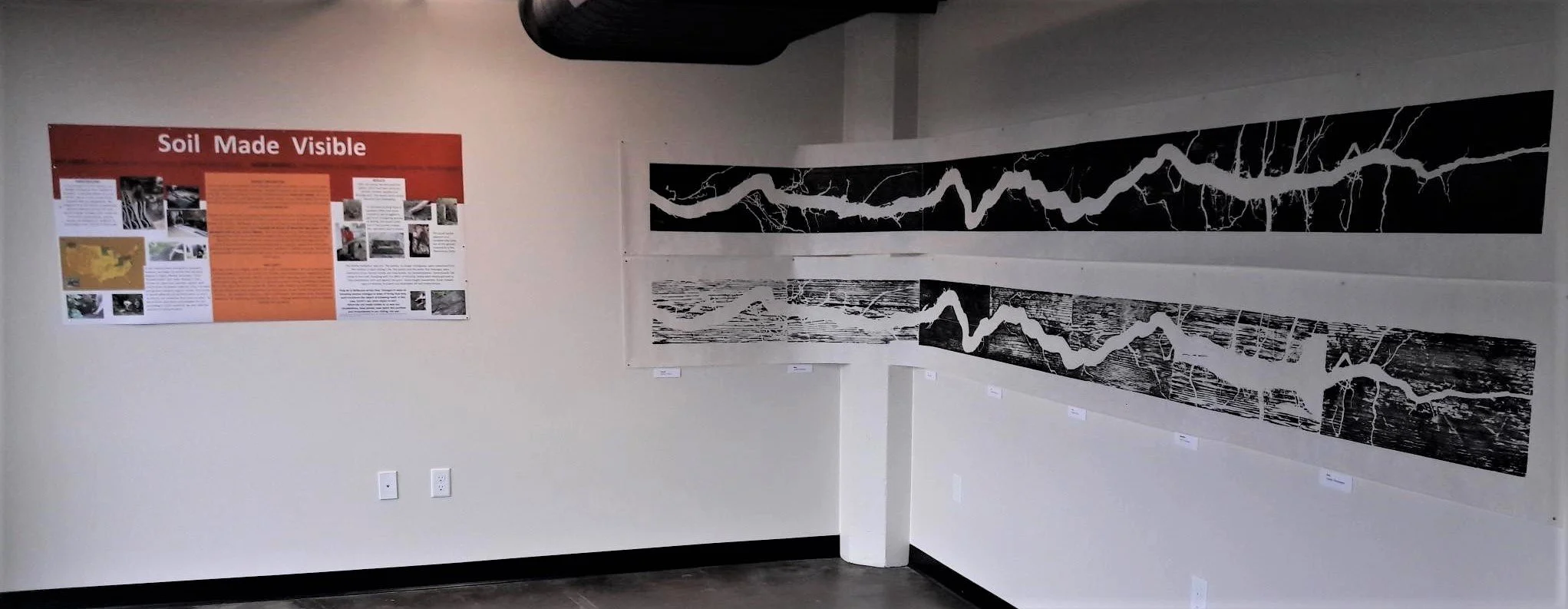
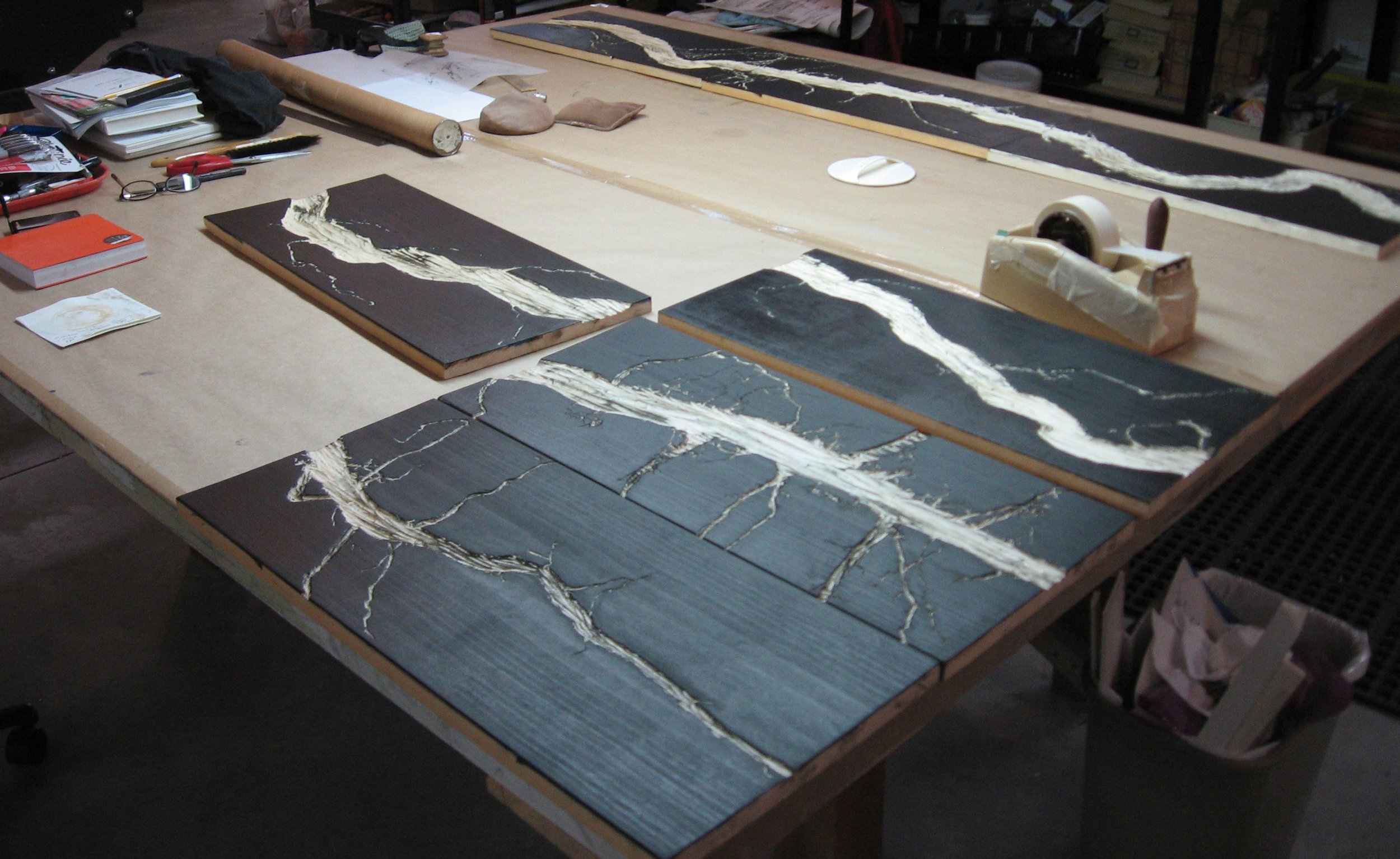
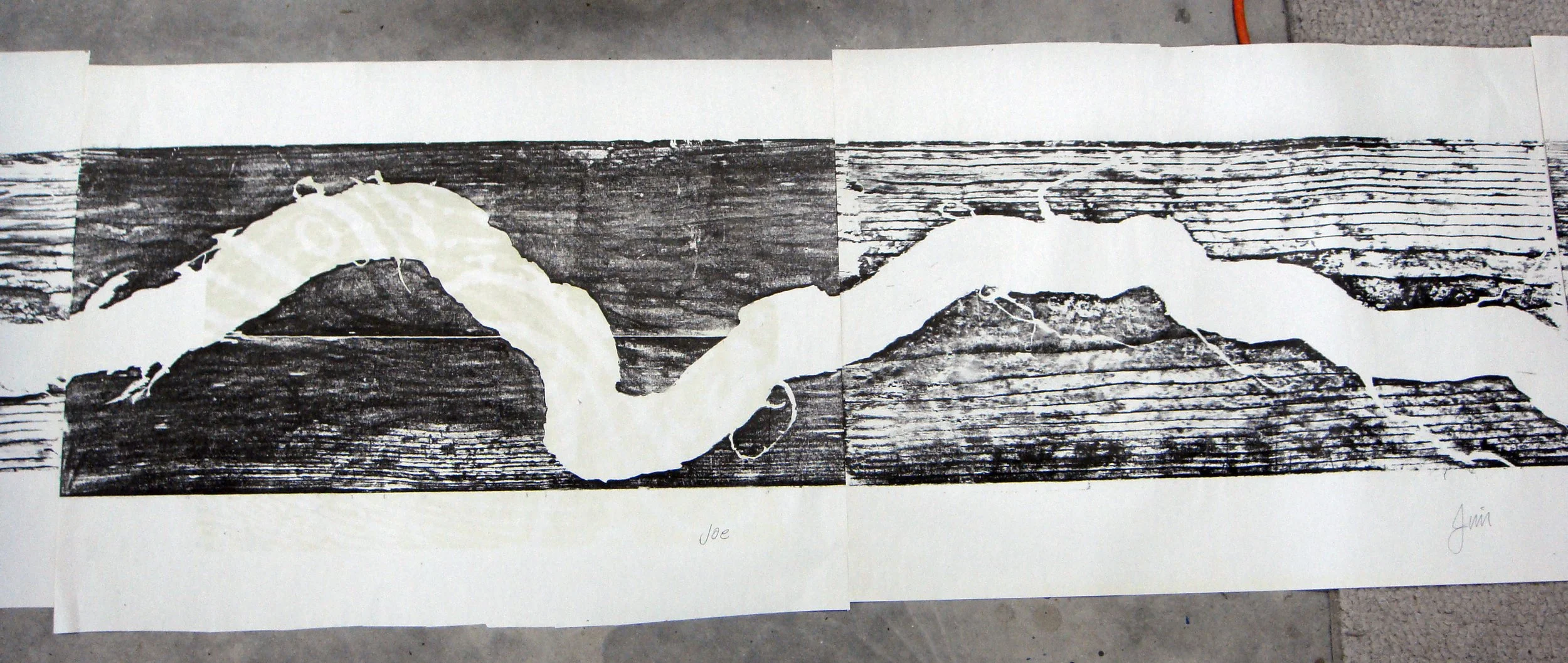
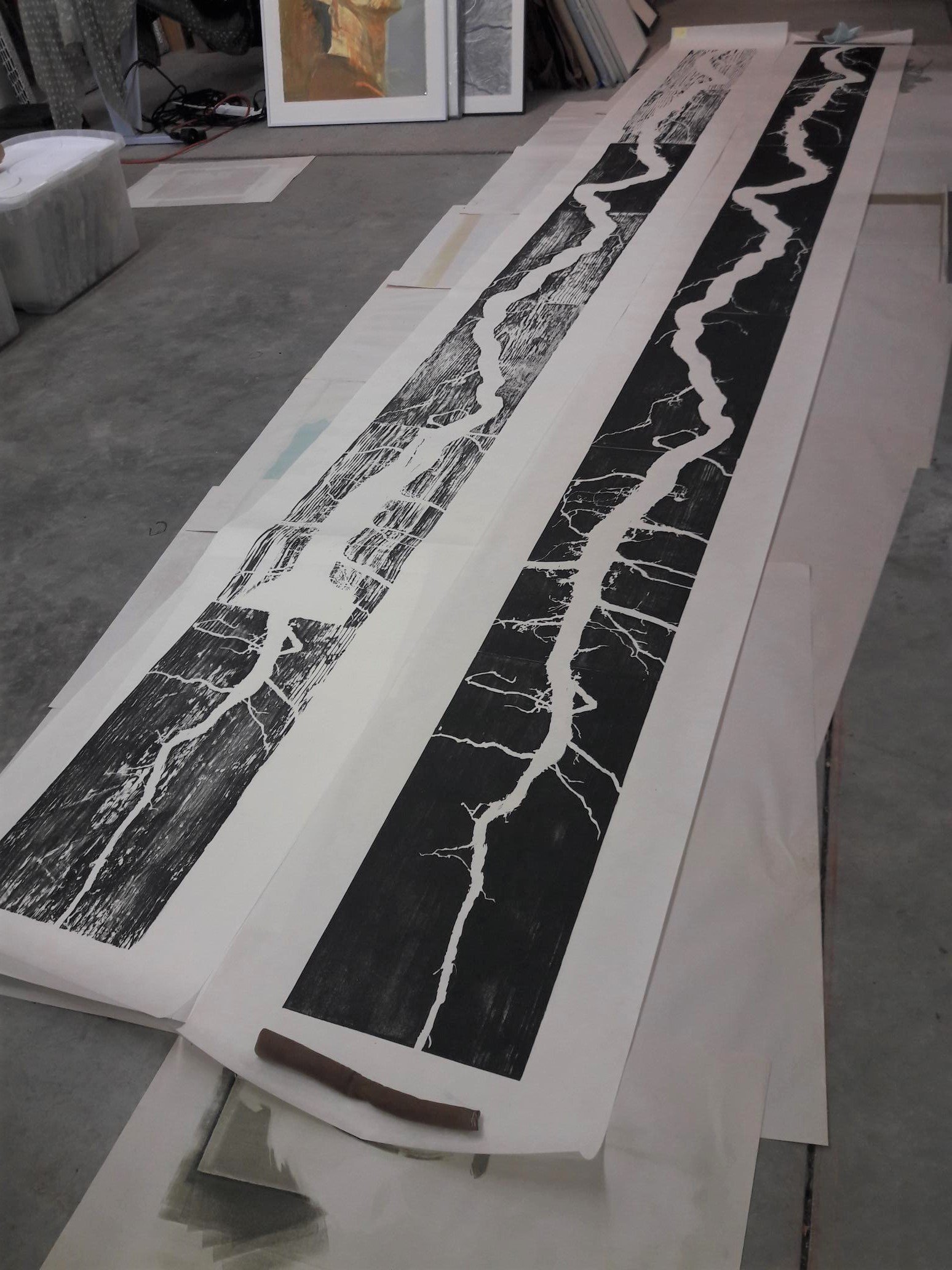
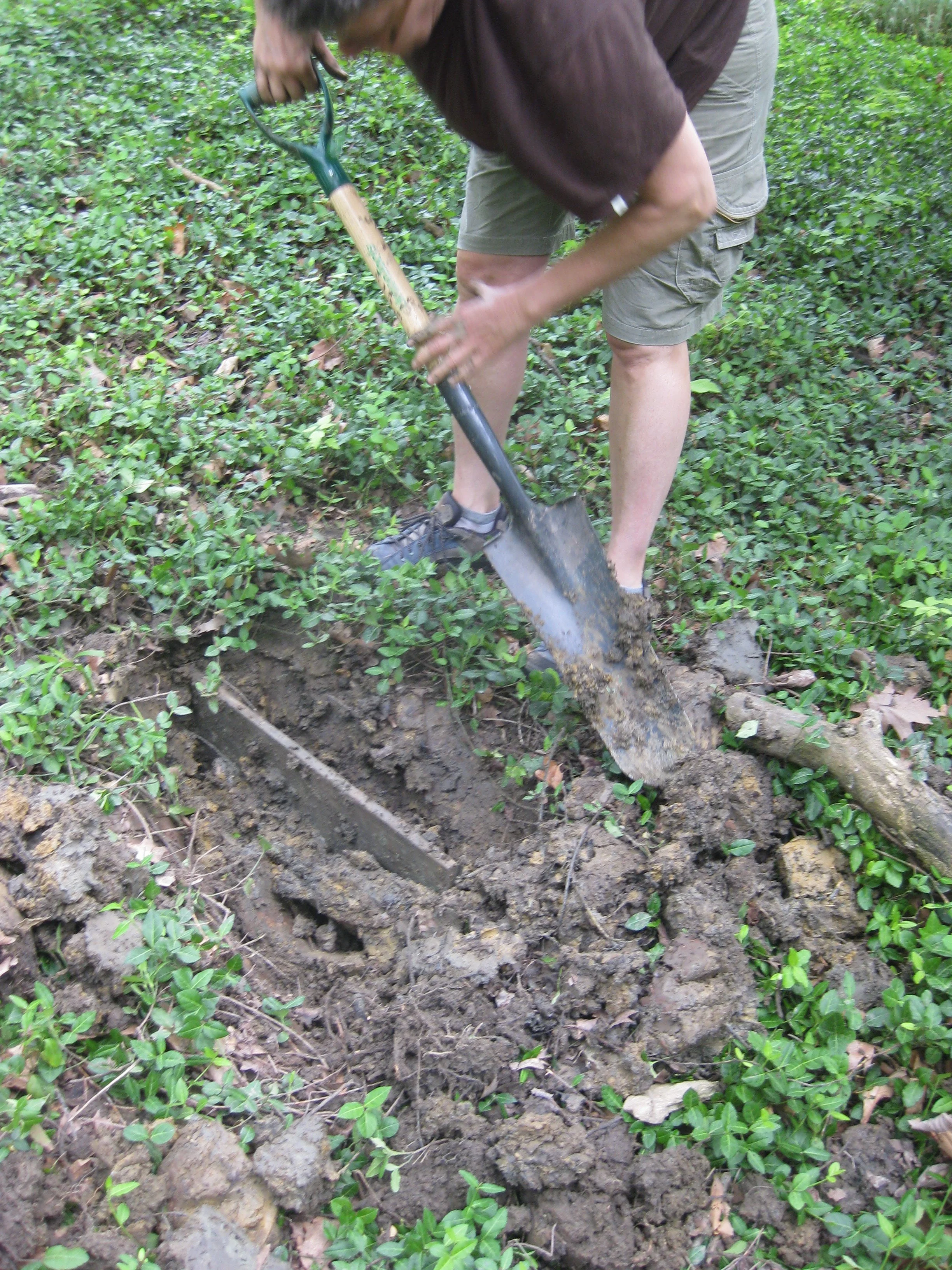
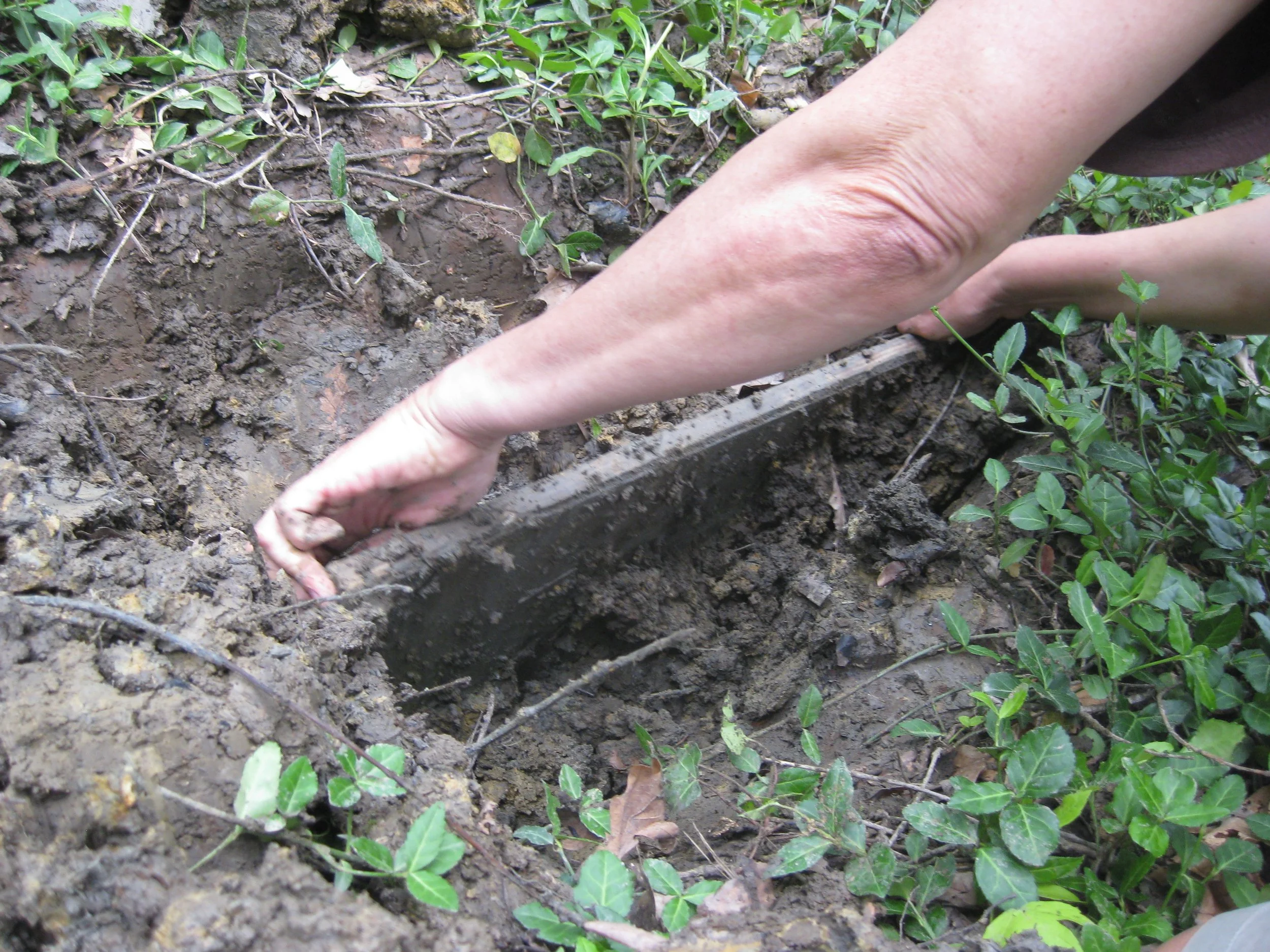
Drawn to the intimate association between soil and roots, and the important role root structures have played in Mary’s artwork, we chose to plant a root image below the surface. We began our inquiry by carving and printing an image of a root on seven panels of wood, then burying the blocks of wood for two years in the backyard soils of our seven siblings, who are spread across the United States. We imagined the root as the familial umbilical cord, connecting the siblings to the Kentucky earth from which we seven originated. We liked the idea of the continuous root system becoming disjointed as separate pieces from the same family lineage spread across the continent, earthed in various grounds. We left the wood panels in the ground for two years, then exhumed the panels and printed them again.
WHY DIRT?
Soil may seem an unlikely medium for such a collaboration. Yet soil is the ultimate interdisciplinarian. It is an artifact of climate, past and present, vegetation, from roots to crown, organism effects, large and small, geology worn to its elements, and human imprint. From that rich alchemy comes a living, breathing substance that is the basis for all terrestrial life. Silent, dark, hidden and underfoot, soil holds secrets about the past and promise for the future. As we break the ground in our project, soil reveals its textures, colors and breath. Soil seems to be the perfect metaphor for exploring the underside of our sibling relationships and our shared passion for our work.
EXPECTATIONS
In the inception of this project, our siblings’ backyards-from Seattle to Scranton- stretched before us in our minds’ eye as a vast canvas to be painted with soil geography. We imagined that the varied climates and parent materials across the land would emerge to leave their marks on the buried wood panels, and we would see evidence of Andisols in Washington and Ultisols in Kentucky.
As we traveled from backyard to backyard, however, we began to realize that we were digging in highly altered soilscapes. These
“domesticated” soils were formed in the climate of urban and suburban sprawl, with construction fill parent material, urban chickens and garden compost organic matter. Our blocks of wood reflected soil domestication as much as natural soil variations from place to place. As we dutifully described and sampled the soil, according to USDA methods, we also read the imprints of domestication.
RESULTS
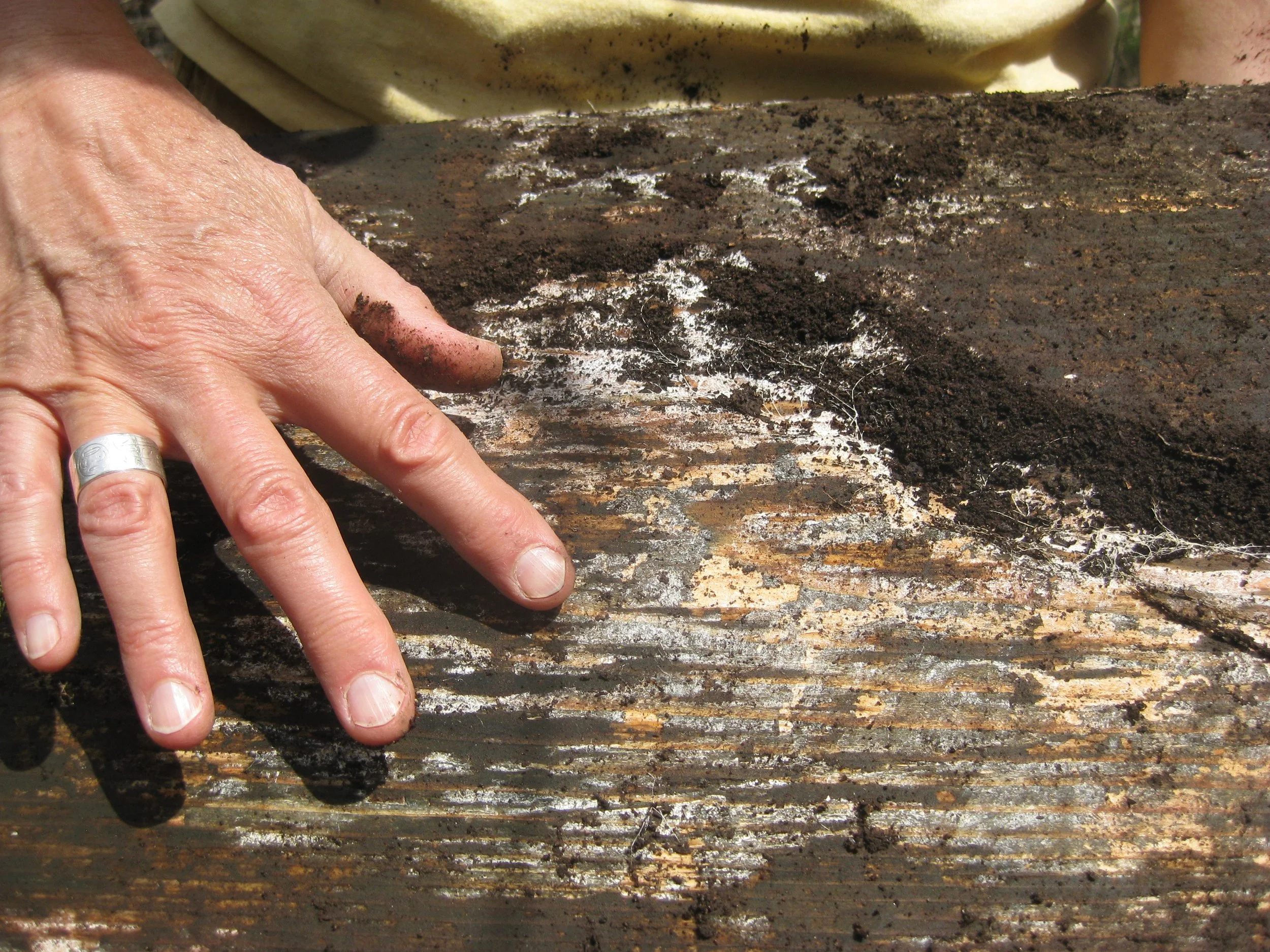
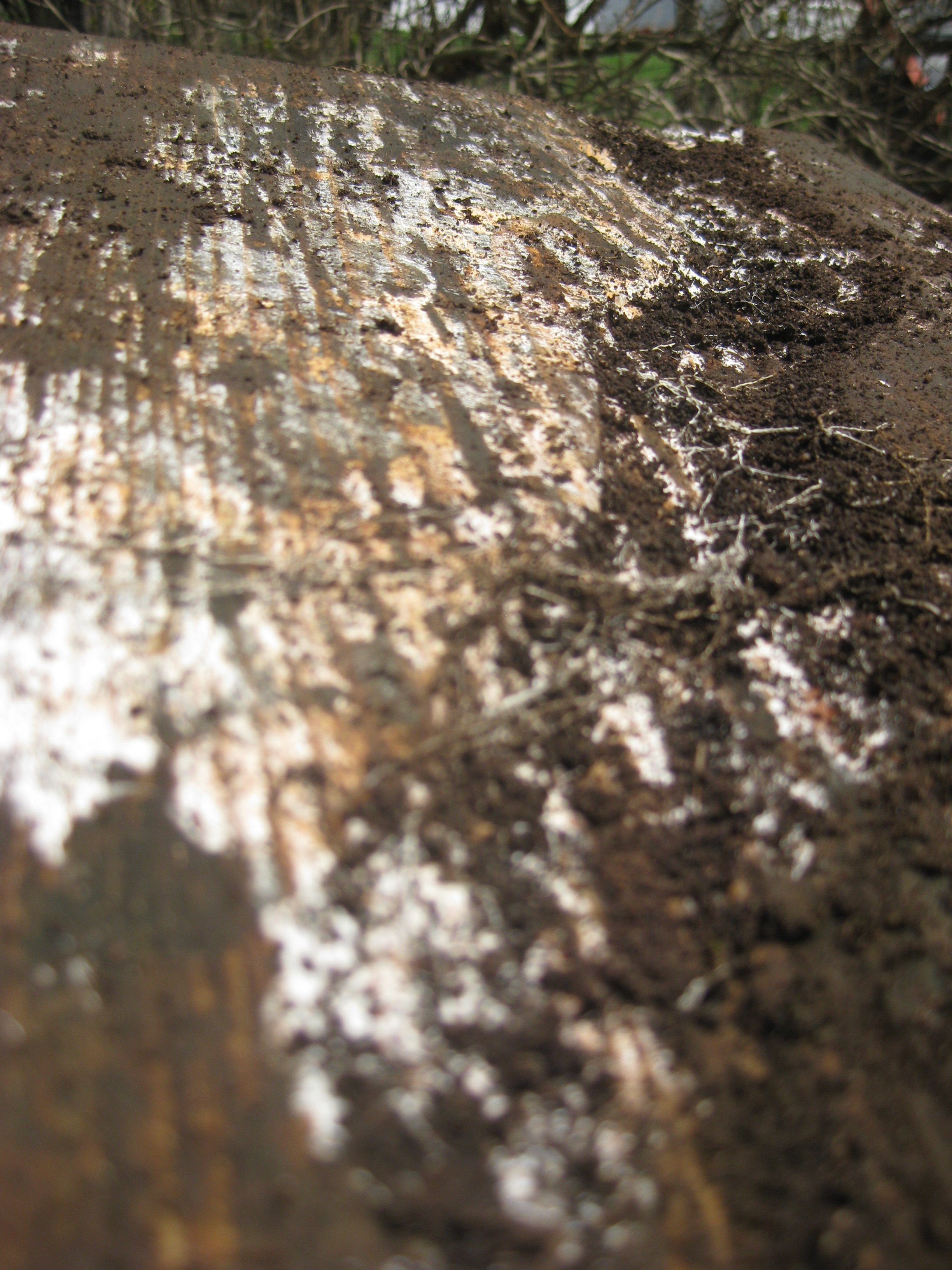
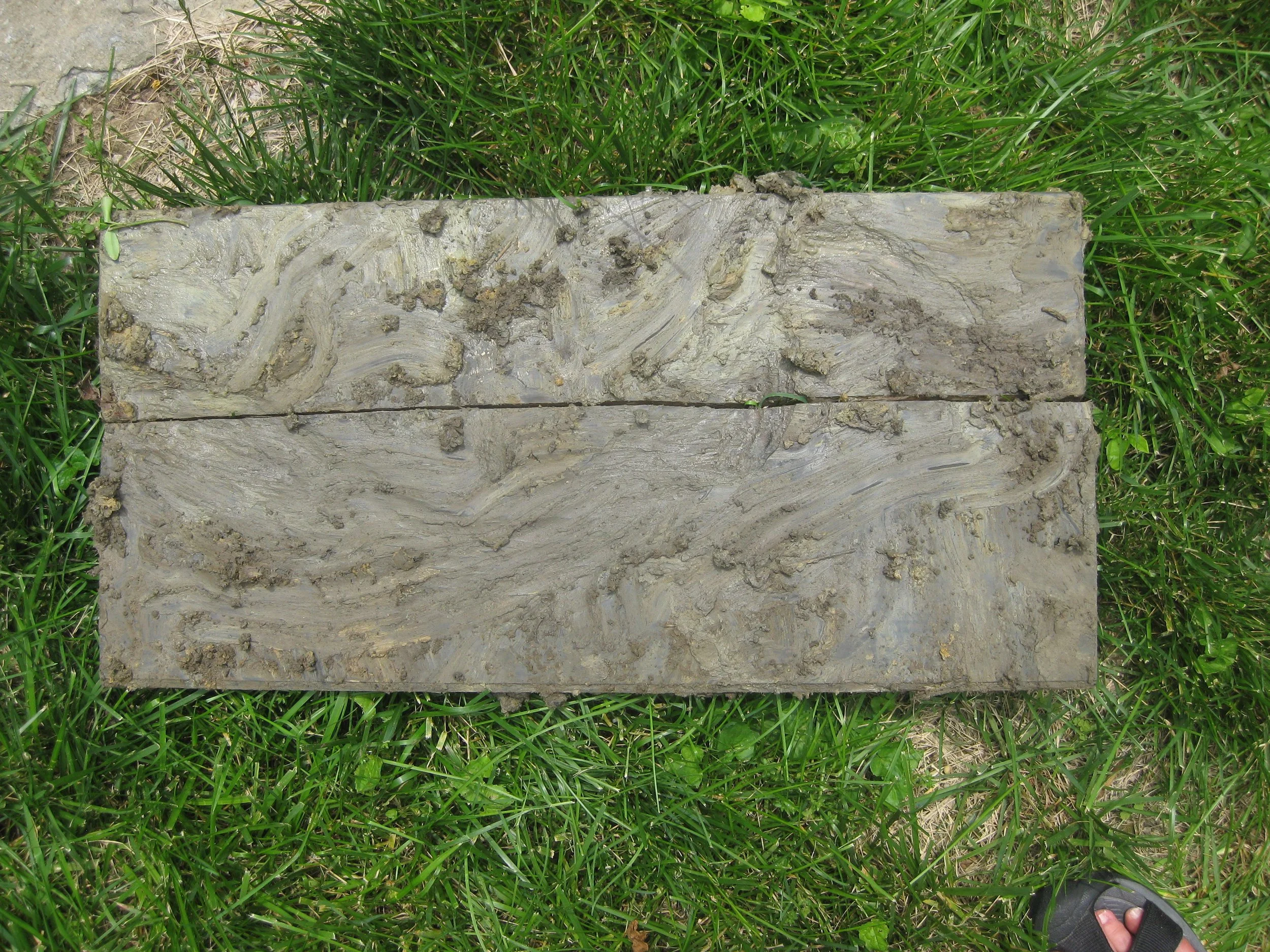
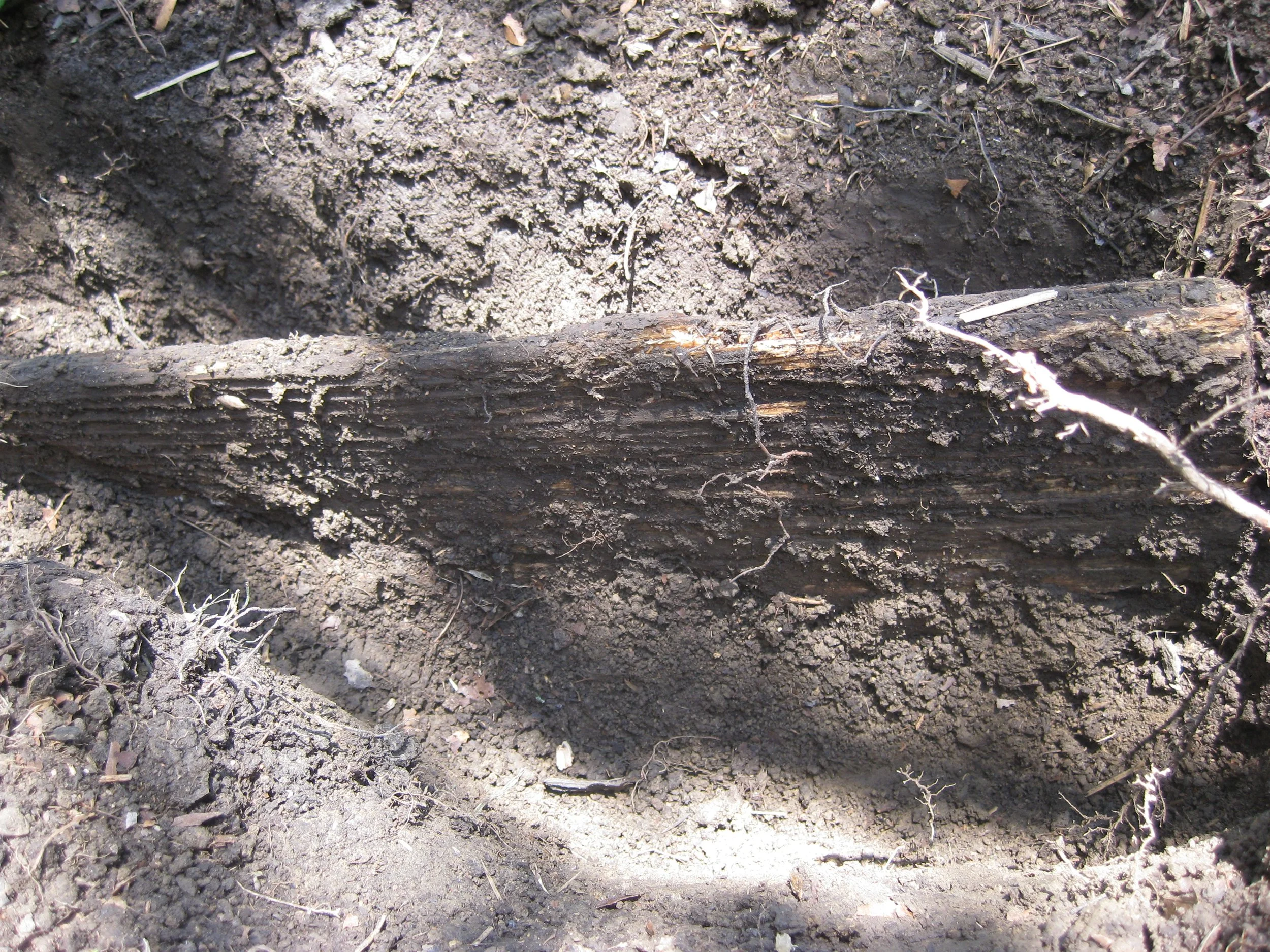
After two years, we exhumed the panels, which had been variously etched, cracked, warped and disintegrated. The results were varied, beautiful and interesting.
In the boot-sucking clays of southern Ohio, one panel cracked as we struggled to get it out of ungiving ground. In Seattle, the board came out of the ground sponge-like, saturated, and in pieces.
The panel buried adjacent to a compost pile came out of the ground covered by a fine filamentous fungi.
The family metaphor was rich. The panels, no longer contiguous, were unearthed from the residue of each sibling’s life, the panels and the prints that emerged, were memories of our former selves, our new bonds, our domestications. Some boards had clung to their soil, breaking with the effort of resisting. Some were deeply grooved as they weathered, with and against the grain. Some fought reassembly. Some showed signs of distress, but were not destroyed. All had lovely texture.
Puig de la Bellacasa writes that “changes in ways of knowing involve changes in ways of living that may well transform the object of knowing itself, in this case, Earth’s soil, from object to kin”.
What the soil made visible to us was our situatedness, now joined, now apart, but earthed and remembered in our sibling, the soil.
-Puig de la Bellacasa, M (2014) Encountering bioinfrastructure: Ecological struggles and the sciences of soil. Social Epistemology 28(1): 26–40.